

Agriculture

With over 59,000 dairy cows in Fond du Lac county, ensuring high-quality forage production is critical to sustaining milk production and farm profitability. Helping growers meet forage quality goals for their farm means lower outside feed costs, healthier cows and improved sustainability of that farm. Furthermore, given the key role Spanish-speaking workers play, providing bilingual information is essential. Through training, newsletters, webinars, workshops, and other resources, Extension’s Agriculture team ensures that feasible, science-based practices are accessible to farmers, managers and workers. This approach helps improve communication, increase efficiency, and enhance the overall performance of local dairy operations.
Crops | Liz Gartman, Regional Crops Educator
Planning for three in-person and one virtual crop management update programs for crop growers, agency staff, consultants and educators. The goal is to provide timely crops and soils management updates where the audience learns about the most recent research findings from University of Wisconsin and Extension specialists that can help them make more productive and profitable decisions moving into the 2026 crop season.
- Each crop growing season offers its own set of challenges and opportunities based on weather, pests and economics. Extension specialists engage in work that deals with many of these challenges.
- The update programs offer a space for specialists to share their findings and tools with key stakeholders that can implement these management methods to improve forage and grain production, soil health and profitability for farms in Wisconsin.
- The Badger Crop Update planning team has identified three in-person venues and one virtual opportunity, and has aligned an agenda of speakers that can provide the most insight to the audience based on the 2025 growing season. There are additional opportunities for local educators to share upcoming programs and updates, as well as networking between educators, specialists and attendees.
An article for the Midwest Forage Association’s “Clippings” e-Newsletter targeted toward forage growers, agency staff, researchers and agribusiness consultants. The article focused on the Wisconsin Cover Crop Data Network, an opportunity for cover crop growers to quantify their cover crop biomass while also receiving forage quality analysis metrics. The goal of this article was to create more awareness of the program and tools and seek new collaborators for the project moving forward.
- The Midwest Forage Association publishes a monthly e-Newsletter, the “Clippings.” They look to Extension specialists, researchers and industry to provide relevant, forage related content for this newsletter.
- The MFA reached out to me to provide an article and this was an excellent opportunity to share the Wisconsin Cover Crop Data Network with a wider audience that can learn from the work being done here in Wisconsin. I reached out to Dan Marzu, our Extension lead on the Wisconsin Cover Crop Data Network to get more information regarding the project. Dan provided key links and information about the project and I pulled together the article, with Dan providing his expertise in reviewing the content and purpose of the project.
- The MFA Clippings are e-mailed to all MFA members, and are accessible to others online. This article was also linked in the Hay & Forage Growers “Hay Pellets” listing which increased our reach to those receiving that e-Newsletter.
Dairy I Manuel Peña, Regional Dairy Educator
An article written for dairy farmers and industry professionals where we discussed the importance and impact of Body Condition Score (BCS). The purpose of the article is to help farmers of Fond du Lac County to measure it on farm, to help prevent digestible disorders at different stages of production, and to increase efficiency of their cows.
- Fresh cow issues cost producers approximately $8 billion each year in the United States, representing a significant economic burden on the dairy industry. A substantial portion of these problems can be traced back to the cow’s body condition at the time of calving, which plays a crucial role in determining her health, productivity, and ability to transition smoothly into lactation. Cows that are either too thin or too fat at calving are more susceptible to a range of metabolic disorders, such as ketosis, milk fever, and displaced abomasum, all of which can compromise milk production, increase veterinary costs, and even lead to early culling. Proper management of body condition during the dry period and close-up phase is therefore essential to minimizing these fresh cow issues and improving both animal welfare and farm profitability. This article is designed to guide farmers in accurately scoring the body condition of their animals at different stages of production. By understanding and applying proper scoring techniques, farmers can make informed management decisions that support herd health, productivity, and overall farm efficiency.
Community Development
UW Extension Fond du Lac County Community Development provides educational programming through capacity-building workshops such as Fund Development and Fundraising, facilitates community conversations that spark collaboration and action on emerging needs, and supports organizational leaders with 1:1 coaching, professional development, and connections to resources.
Noah Reif, Community Development Educator
A nonprofit financial development workshop for nonprofit leaders with the Fond du Lac Area Foundation. The goal is to support local nonprofits in their own efforts to diversify their funding sources, build organizational capacity to meet expanding community needs, and become more financially sustainable.
- County nonprofit stakeholders identified financial development as their primary area of need during the educator’s need assessment. The educator developed a Nonprofit Financial Development curriculum based on existing Extension resources and their own professional experience with input from the Fond du Lac Area Foundation. This curriculum can be delivered as a single session or a series of sessions. A primary goal of the curriculum is the creation of an organization specific action plan to provide immediate next steps for participants to implement. A single-session workshop on Nonprofit Financial Development was held on November 13, 2025 and attended by 3 people from 2 organizations. Evaluation shows that participants feel they gained new fundraising skills and knowledge (4 of 5), and that the workshop was very useful for participants (5 out of 5). The educator’s facilitation was rated as a 4.7 out of 5.
Human Development and Relationships

UW Extension Fond du Lac County Extension Human Development & Relationships provides programs that promote housing stability, support youth, and strengthen families. The Rent Smart program helps families gain the knowledge and skills needed to secure and maintain housing, while Adulting 101: Keys to Independence prepares older youth aging out of foster care with life skills in finance, careers, and communication. The program also offers Co-Parenting Education to improve communication between co-parents, address the impact of divorce on children, and build strategies for resilience. In addition, Extension supports helping professionals by providing financial education, professional development, and connections to financial resources.
Carol Bralich, Human Development and Relationships Educator
Helping professionals (e.g. social workers and case managers) in Fond du Lac County and other Wisconsin communities frequently work with economically vulnerable populations. They may see the need for clients’ access to financial education and yet may not have the training, time, or resources to address this need. When an individual has access to beneficial financial services, and can apply the knowledge of how to utilize them, they have better outcomes at achieving financial functioning and improved financial well-being. In response to the need to provide helping professionals with training on how to work with their clients on money issues, Extension created the Encouraging Financial Conversations (EFC) course. Through a six-module training course, EFC provides social workers and other frontline case managers with tools that enable them to help their low-income clients take charge of their finances and reach their goals. Topics covered in the October-November 2025 EFC virtual series include engaging in financial conversations, goal setting, maximizing income, spending, saving, borrowing, and protecting one’s money.
When clients have the skills to navigate financial systems, create sound plans for themselves and their families, and access to applicable resources, they are often able to independently resolve financial problems and build secure futures. One participant stated they will apply the following from the course: “I learned of better ways to communicate about tough financial topics, and gained new valuable resources to share with my families.” Of the 23 participant survey respondents, 91% felt more comfortable working with clients on financial matters, 91% felt more prepared to bring up a financial topic with their clients and 91% better understand the role they can take in working with clients on financial concerns.
Positive Youth Development

UW Extension Fond du Lac County youth grow into engaged, empathetic leaders through hands-on learning and meaningful service. Our 4-H program offers enriching experiences—from STEM challenges and animal science to creative arts—that spark curiosity and build confidence. Signature events like Family Learning Day and Summer Day Camps provide opportunities for exploration and skill-building, while service projects such as food drives and care kit assembly foster civic responsibility and community connection. In partnership with local schools and the Boys & Girls Club, we also offer after-school clubs that create inclusive spaces for growth and belonging.
Tracy Keifenheim, 4-H Program Educator
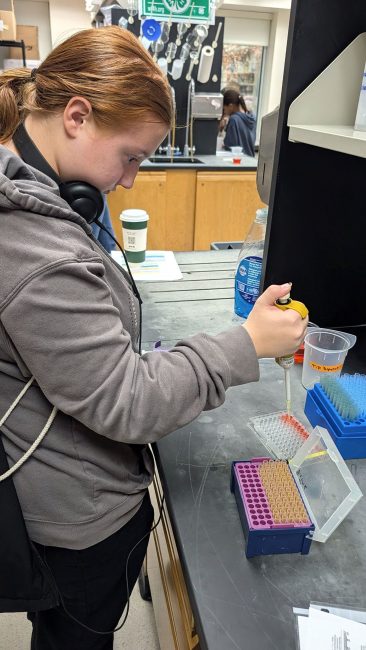
The planning team is developing a Tri-County Science Expedition for 4-H youth in grades 6–13 in collaboration with Washington, Ozaukee, and Fond du Lac Counties and UW–Madison. This initiative aims to engage participants in hands-on exploration of STEM topics such as biotechnology, physics, chemistry, agriculture, and geology, while also incorporating college and career preparation. The program addresses a growing need for immersive STEM experiences that connect classroom learning to real-world applications and responds to requests from educators and families for more collaborative, hands-on programming. The multi-day event will bring together youth from three counties for an interactive learning experience that includes campus visits, lab tours, and workshops led by UW–Madison faculty and staff. Anticipated outcomes include increased confidence in scientific inquiry, greater awareness of STEM career pathways, and stronger connections between youth and higher education institutions. By engaging in practical STEM activities and interacting with professionals, participants will gain valuable skills and envision future possibilities in science-related fields. This effort supports broader goals of workforce development and educational equity by expanding access to high-quality STEM programming.
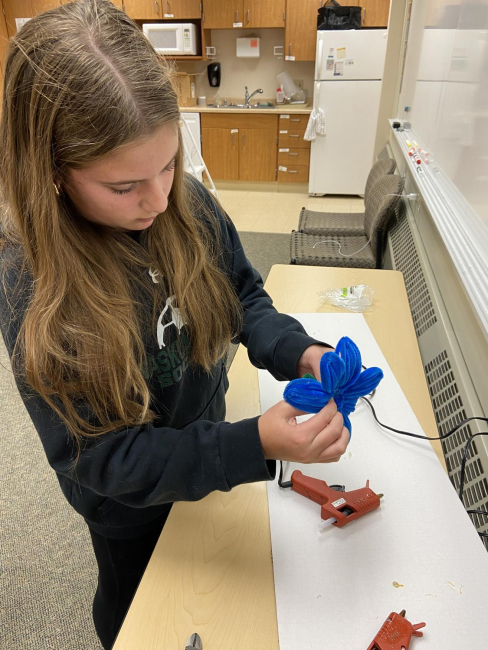
A Pipe Cleaner Flower Workshop was offered for youth in 3rd grade and older to learn new art techniques, explore creative expression, and build confidence through hands-on projects. Youth in Fond du Lac County expressed interest in improving artistic skills in a safe, supportive environment. Thrive 2024 survey data showed “Sparks” scored low among youth, while Visual Arts ranked high, highlighting a need for programming that nurtures passions and creativity. In response, I partnered with youth leader Hannah to design and lead the workshop, which taught flower-making and arrangement techniques. Participants personalized their designs, practiced fine motor skills, and engaged in confidence-building activities. While attendance was small, the program demonstrated the value of youth-led initiatives and emphasized the importance of offering diverse opportunities for youth to explore interests, contributing to a stronger, more connected community.
The University of Wisconsin–Madison Division of Extension provides equal opportunities in employment and programming in compliance with state and federal law.