

Agriculture

With over 59,000 dairy cows in Fond du Lac county, ensuring high-quality forage production is critical to sustaining milk production and farm profitability. Helping growers meet forage quality goals for their farm means lower outside feed costs, healthier cows and improved sustainability of that farm. Furthermore, given the key role Spanish-speaking workers play, providing bilingual information is essential. Through training, newsletters, webinars, workshops, and other resources, Extension’s Agriculture team ensures that feasible, science-based practices are accessible to farmers, managers and workers. This approach helps improve communication, increase efficiency, and enhance the overall performance of local dairy operations.
Dairy I Manuel Peña, Regional Dairy Educator
A train the trainer safety toolbox program for farm operations, safety consultants, educators, and instructors where they find materials to lead or support agricultural safety training by following an interactive guide and adult-learning principles to encourage participation, ownership, and responsibility, while encouraging a Safety Culture.
- This program was developed in response to feedback from dairy producers who expressed a need for practical, on-farm training to reduce injuries and accidents and maximize animal performance. In response, we designed this effort to deliver targeted, farm-based education focused on real-world scenarios and immediate application, with the goal of improving worker safety, animal welfare and profitability. The bilingual Forward Farm Safety Toolbox is based on solid research and is designed to help agricultural operations create a strong safety culture. This foundation supports long‑lasting behavior changes and ongoing leadership support for safety. The toolbox includes a hands-on training tool that helps farms, consultants, and instructors lead training sessions using a 20‑40‑40 model: 20% learning, 40% exploring, and 40% solving. This approach makes safety training more interactive than traditional presentations. Using adult‑learning principles, it encourages participants to take ownership and responsibility. The added learning materials further support a workplace where safe behaviors become part of everyday farm life. This whole approach was tested in a pilot session to get feedback from the people who would be using it. Through pilot testing with farmers, participants reported improved understanding of workplace risks and identified specific changes they could implement immediately, such as safer animal handling, and tractor safety practices and clearer communication protocols among employees. Feedback from the pilot also helped refine the training to better align with different farm conditions, increasing its relevance and usability. This work contributes to broader societal goals by promoting safer agricultural workplaces, reducing the risk of injury, and supporting the well-being of farm employees.
Community Development
UW Extension Fond du Lac County Community Development provides educational programming through capacity-building workshops such as Fund Development and Fundraising, facilitates community conversations that spark collaboration and action on emerging needs, and supports organizational leaders with 1:1 coaching, professional development, and connections to resources.
Andy Wilson, Community Development Educator
Work continues on the development of a countywide community asset mapping tool designed to strengthen community engagement efforts and support more strategic, data-informed decision making. The asset mapping tool currently contains 111 community organizations and public sector partners identified throughout Fond du Lac County and serves as a centralized resource for understanding the county’s network of services, resources, and community assets. Organizations are cataloged by mission area, geographic service region, and community focus, allowing for analysis of service coverage, partnership opportunities, and potential gaps in resources. Interactive mapping features provide a visual representation of where organizations are located and where services are delivered, helping identify underserved areas, concentrations of services, and opportunities for greater collaboration. The tool also supports relationship tracking, stakeholder engagement, and the identification of key community assets that can be leveraged to address local needs. As development continues, the asset mapping tool will help inform Extension programming, strengthen partnerships, address duplication of effort, and provide a clearer understanding of the resources available to residents throughout the county.
Separately, preliminary research has begun into root causes methodologies to support a newly forming community coalition focused on improving outcomes through increased collaboration and alignment. While distinct from the asset mapping project, this work complements broader community development efforts by helping coalition members move beyond addressing symptoms and toward understanding the underlying factors contributing to community challenges. The long-term goal is to support more coordinated, evidence-informed decision making and better alignment between community needs, organizational capacity, and programmatic investments across the county. Ongoing meetings with community organizations, public sector partners, and local stakeholders are being conducted to better understand the scope of their work, the populations they serve, emerging community needs, and perceived gaps in services and resources. These conversations provide valuable context that extends beyond what can be captured through organizational data alone and help identify opportunities for collaboration, coordination, and future programming. Information gathered through stakeholder engagement is being incorporated into the asset mapping process to create a more comprehensive understanding of the county’s strengths, challenges, and opportunities.
Human Development and Relationships

UW Extension Fond du Lac County Extension Human Development & Relationships provides programs that promote housing stability, support youth, and strengthen families. The Rent Smart program helps families gain the knowledge and skills needed to secure and maintain housing, while Adulting 101: Keys to Independence prepares older youth aging out of foster care with life skills in finance, careers, and communication. The program also offers Co-Parenting Education to improve communication between co-parents, address the impact of divorce on children, and build strategies for resilience. In addition, Extension supports helping professionals by providing financial education, professional development, and connections to financial resources.
Carol Bralich, Human Development and Relationships Educator
The Resident Services Coordinator at Riverview Apartments in Fond du Lac requested an educational session on scam awareness as part of our ongoing financial education workshops in their community room. The workshop, Be Scam Smart, was held on May 19th with eight residents attending. The presentation covered key information about common types of scams, how scammers typically try to target consumers, and practical strategies residents can use to protect themselves.
The session introduced various scam categories, including phone and text scams, email and internet fraud, lottery and prize scams, impersonation scams, and financial exploitation attempts. The session also emphasized warning signs such as unsolicited requests for personal information, high‑pressure tactics, threats, requests for payment through gift cards or wire transfers, and offers that seem too good to be true.
Participants engaged actively in discussion, sharing personal experiences and asking questions about how to recognize and respond to suspicious communications. The conversation also addressed steps to take if someone believes they have been targeted or has already responded to a scam, including reporting options and available community resources.
Of those participants (7) who completed the post workshop evaluation, 72% indicated that they learned a variety of ways to prevent financial scams. When asked, what is something that you plan to use from this session, one participant wrote, “Checking the source of emails better.” Another participant wrote, “ Hanging up on spam callers.”
Overall, the session aimed to increase residents’ confidence in identifying scams, encourage vigilance, and promote safer communication and financial practices within the Riverview community.
Positive Youth Development

UW Extension Fond du Lac County youth grow into engaged, empathetic leaders through hands-on learning and meaningful service. Our 4-H program offers enriching experiences—from STEM challenges and animal science to creative arts—that spark curiosity and build confidence. Signature events like Family Learning Day and Summer Day Camps provide opportunities for exploration and skill-building, while service projects such as food drives and care kit assembly foster civic responsibility and community connection. In partnership with local schools and the Boys & Girls Club, we also offer after-school clubs that create inclusive spaces for growth and belonging.
Tracy Keifenheim, 4-H Program Educator
The Fond du Lac County 4‑H LEGO Club provides youth with an engaging, hands-on learning opportunity focused on engineering, technology, and creative problem-solving through LEGO building. In response to the 2025 4‑H Thrive data, which identified Sparks as one of the county’s lowest outcome areas, this club was intentionally designed to focus on a specialized interest area that promotes project-based learning and helps youth connect with something they care deeply about.
During monthly meetings, youth participate in LEGO build challenges and skill-building activities that strengthen their brick-building knowledge while encouraging teamwork and creativity. Volunteers, youth leaders, and 4‑H Program Educator Tracy Keifenheim work together to facilitate the club, with youth leaders taking an active role in teaching building techniques and mentoring members. This youth-led approach not only builds technical skills but also supports leadership development and positive relationships among participants. As the club transitions to new youth leadership, Keifenheim and the youth leaders are committed to sustaining and growing the program.
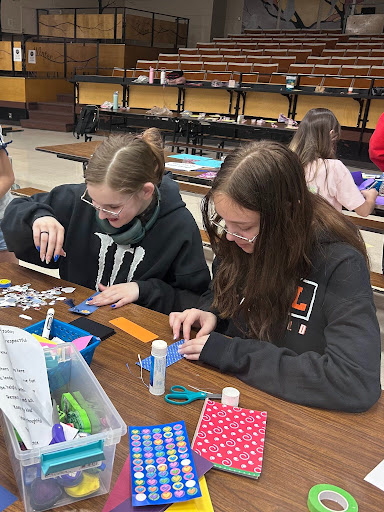
Oriole Sparks: Service Learning was a six-week experiential learning program that engaged 21 sixth- through eighth-grade students at Bessie Allen Middle School in meaningful, hands-on service projects designed to build youth skills while addressing local community needs. Guided by a survey administered by Extension staff to identify student interests, the program was intentionally aligned with what youth cared about most, increasing engagement and relevance. In collaboration with the school’s activities director, participants explored their personal sparks and worked together to plan and carry out a variety of service projects, including making dog toys for a local animal shelter, creating no-sew blankets for a homeless shelter, designing positive message posters for the community pool, producing bookmarks for the public library, and beginning a community scavenger hunt project. Through these activities, youth strengthened communication, teamwork, empathy, and problem-solving skills while gaining confidence in their ability to make a positive difference. The partnership with Bessie Allen Middle School helped expand access to 4‑H programming for youth who may not otherwise participate, supporting equitable access and reinforcing Extension’s role as a trusted partner in youth development and community engagement.
The University of Wisconsin–Madison Division of Extension provides equal opportunities in employment and programming in compliance with state and federal law.