

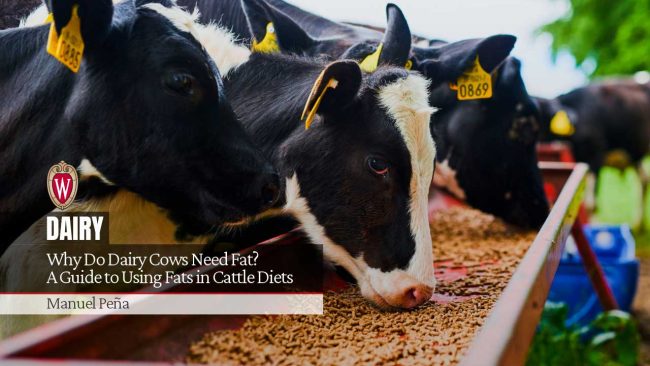
Dietary lipids provide high-density energy to dairy cows, primarily boosting milk production and reproductive performance. Microbes in the rumen tend to turn unsaturated fatty acids into saturated fatty acids through a process called biohydrogenation. Later, the fatty acids go to the small intestine for absorption. Managing this fat intake within specific thresholds prevents negative rumen fermentation impacts while supporting cows through early lactation energy deficits. Read the full article from Regional Dairy Educator Manuel Peña here.