

Agriculture

With over 59,000 dairy cows in Fond du Lac county, ensuring high-quality forage production is critical to sustaining milk production and farm profitability. Helping growers meet forage quality goals for their farm means lower outside feed costs, healthier cows and improved sustainability of that farm. Furthermore, given the key role Spanish-speaking workers play, providing bilingual information is essential. Through training, newsletters, webinars, workshops, and other resources, Extension’s Agriculture team ensures that feasible, science-based practices are accessible to farmers, managers and workers. This approach helps improve communication, increase efficiency, and enhance the overall performance of local dairy operations.
Crops | Liz Gartman, Regional Crops Educator
A series of factsheets covering beef cow nutrition through all four production phases. The goal of these factsheets is for beef producers to better understand production in order to achieve a calving interval of 365 days. To meet this goal, producers need to make sure their cows are on the correct plane of nutrition. With good management, nutritional needs of the beef cow-calf operation can be largely met with forages.
- Wisconsin can experience both poor and great growing seasons depending on human and environmental factors. Beef cows need proper nutrition year-round to achieve optimal production. Poor nutritional management leads to decreased performance and profitability. Poor management of pastures and forage systems will lead to a decrease in forage quality and quantity available for beef producers throughout the year.
- Educational materials offered on the nutrients the cow needs throughout the year and how forages can achieve an ideal calving interval can help producers achieve economic viability long term.
- This series of factsheets on Beef Cow Nutrition throughout the four production phases can help producers improve pasture and forage management while ensuring proper nutrition for the whole herd year-round.
A four part Focus on Forage webinar series for forage growers, livestock producers, agency staff and agricultural consultants where research based forage management solutions are shared to optimize forage yield and quality to improve animal performance and overall farm profitability.
- Quality forage production is important to support the livestock and dairy industries in Wisconsin. Meeting forage quality and yield goals is a key metric to improving profitability on these operations.
- The Forage workgroup identified key topics affecting forage growers in the state and generated a four session series – Focus on Forage Management, Focus on Forage Research, Focus on Managed Grazing and Focus on Cover Crop Forages. Each one hour webinar featured three short topics with different speakers from Extension, Dairyland Laboratories, USDA Dairy Forage Research Center and Land Cares LLC. Time was also offered for participants to get their forage questions answered.
- Focus on Forage Management – 119 attendees; Focus on Forage Research – 82 attendees; Focus on Managed Grazing – 91 attendees; Focus on Cover Crop Forages – 82 attendees.
Dairy I Manuel Peña, Regional Dairy Educator
A webinar for dairy farmers and Ag professionals that focused on virtual fencing and how it meets pasture nutrition for maximum productivity. The purpose of this webinar was to provide participants with unbiased, evidence-based research about other strategies for grazing and nutrition.
- Well‑managed pastures can deliver highly digestible, protein‑rich forage. Pasture alone rarely provides a perfectly balanced diet, especially for high‑producing dairy cows.
- Dairy educators from the nutrition workgroup worked together to find topics to address this need. From a dairy farmer using virtual fencing on his dairy heifers, research done on performance of heifers raised on pasture and in confinements operations, and how to get the most out of pastures to raise our dairy animals.
Participants explored current research on pasture-raised heifers, including effective supplementation strategies to optimize their performance. They also gained insight into emerging virtual fencing technologies and how these systems can be used to improve herd management.
Human Development and Relationships

UW Extension Fond du Lac County Extension Human Development & Relationships provides programs that promote housing stability, support youth, and strengthen families. The Rent Smart program helps families gain the knowledge and skills needed to secure and maintain housing, while Adulting 101: Keys to Independence prepares older youth aging out of foster care with life skills in finance, careers, and communication. The program also offers Co-Parenting Education to improve communication between co-parents, address the impact of divorce on children, and build strategies for resilience. In addition, Extension supports helping professionals by providing financial education, professional development, and connections to financial resources.
Carol Bralich, Human Development and Relationships Educator
Rent Smart is a six‑module Extension education program that equips renters with practical skills to find, obtain, and maintain safe and affordable housing. Participants learn how to determine what they can realistically afford, apply for rental housing, understand renter and landlord responsibilities, communicate effectively with landlords, and manage housing expenses. The program is especially valuable for individuals who are new to renting or who have negative rental histories, increasing their housing stability while decreasing reliance on public support systems.
The need for Rent Smart is clear. The average American tenant is cost‑burdened, paying 30% or more of their income toward rent. In Wisconsin, 65% of renters spend more than 30% of their income on housing, and 37% spend more than half of their monthly income—particularly those earning under $50,000 per year. At the same time, the hourly wage needed to afford a modest two‑bedroom rental in Wisconsin ($18.56) far exceeds the state minimum wage of $7.25. Combined with a statewide housing shortage, these conditions make it increasingly difficult for communities like Fond du Lac County to attract and retain a stable workforce.
Rent Smart has been strengthened through intentional community partnerships. In collaboration with St. Katharine Drexel Shelter, Bralich provided Rent Smart for shelter residents, aligning directly with their current or future financial and housing needs. In January 2026, 14 shelter residents completed the full six‑session course and received certificates. In addition, certificates were also earned by five Beacon House residents and eight Arc Community Services clients in February and March.
Program outcomes demonstrate strong impact. Among January 2026 survey respondents, 91% reported that Rent Smart will or might help them keep housing in the future. One participant shared, “Communicating and developing a business relationship with my landlord is a good idea.” By supporting responsible tenants and sustainable housing stability, Rent Smart contributes to stronger families, a more reliable workforce, and healthier communities across Fond du Lac County
Positive Youth Development

UW Extension Fond du Lac County youth grow into engaged, empathetic leaders through hands-on learning and meaningful service. Our 4-H program offers enriching experiences—from STEM challenges and animal science to creative arts—that spark curiosity and build confidence. Signature events like Family Learning Day and Summer Day Camps provide opportunities for exploration and skill-building, while service projects such as food drives and care kit assembly foster civic responsibility and community connection. In partnership with local schools and the Boys & Girls Club, we also offer after-school clubs that create inclusive spaces for growth and belonging.
Tracy Keifenheim, 4-H Program Educator
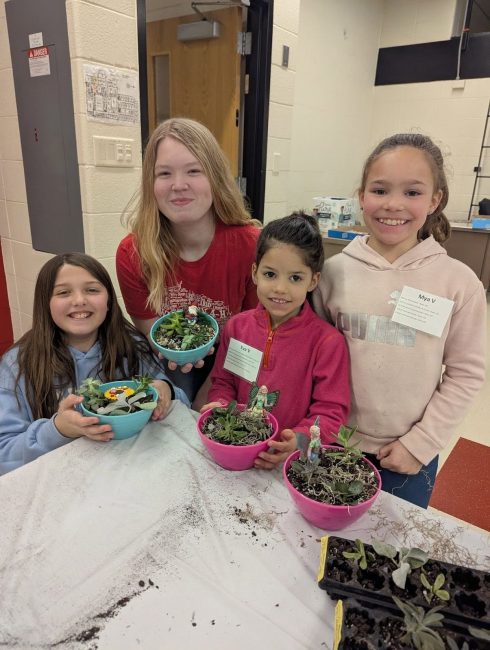
Family Learning Day is an annual 4‑H project learning event in Fond du Lac County designed to address the county’s low “Sparks” indicator by providing youth with hands‑on, project‑based learning across a variety of interest areas. Youth registered for up to five interactive workshops led by volunteers, community members, and youth presenters, with sessions intentionally aligned to both high‑enrollment projects and areas lacking ongoing project leadership or curriculum support.
In 2026, 90 youth participated in 45 experiential sessions, generating 267 evaluations that demonstrated strong engagement and learning outcomes. Results showed that 98% of participants found sessions fun and engaging, 89% learned something new, 86% reported increased interest in the topic, and 86% tried something they had not done before, while 98% rated instructors as helpful. Youth feedback highlighted excitement, curiosity, and eagerness to continue learning beyond the event.
Family Learning Day strengthens project learning opportunities, supports positive youth development, and builds confidence, creativity, and problem‑solving skills that contribute to academic success and workforce readiness. The event also fosters family engagement and community connections, while expanding youth leadership development, with multiple youth expressing interest in leading future sessions.
The University of Wisconsin–Madison Division of Extension provides equal opportunities in employment and programming in compliance with state and federal law.